


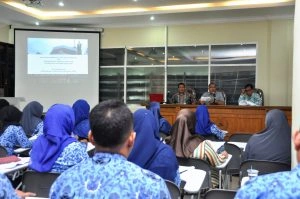
This activity was carried out by the instructions of USU Rector Prof. Dr. Runtung, S.H., M.Hum., as stated in letter number: 15122/UN5.1.R/SDM/2019 regarding the coaching of civil servants and non-civil servant employees at the University of North Sumatra. The socialization of the coaching intended to clarify the authority of the Work Unit in enforcing the disciplinary regulations of civil servants in accordance with Government Regulation number 53 of 2010.
“Lately, the disciplinary violations committed by civil servants and non-civil servant employees within USU and the resolution of these violations by the Work Unit have been handed over to the USU Rector for employee reshuffling. However, this action is not by the disciplinary regulations of Government Regulation Number 53 of 2010,” stated the letter.
“Many people have mistakenly believed that the sanctions against an employee, especially civil servants, who violate work discipline, are imposed by the USU Rector. This is not true. The Work Unit can directly punish employees who violate the rules, whether civil servants or non-civil servant employees,” explained Jonner Hasugian in his address to all his staff.
According to Government Regulation number 53 of 2010, coaching of civil servants is the responsibility of their immediate superiors. Therefore, for non-civil servant employees suspected of violating disciplinary regulations, coaching is carried out by their immediate superiors. The types of disciplinary violations such as absence from work and non-compliance with working hours and the disciplinary punishments imposed can be seen in articles 8, 9, and 10.
The activity, which was attended by all USU Library employees, lasted for approximately two hours. During the question and answer session, the participants took the opportunity to further explore the regulations, which are intended.

